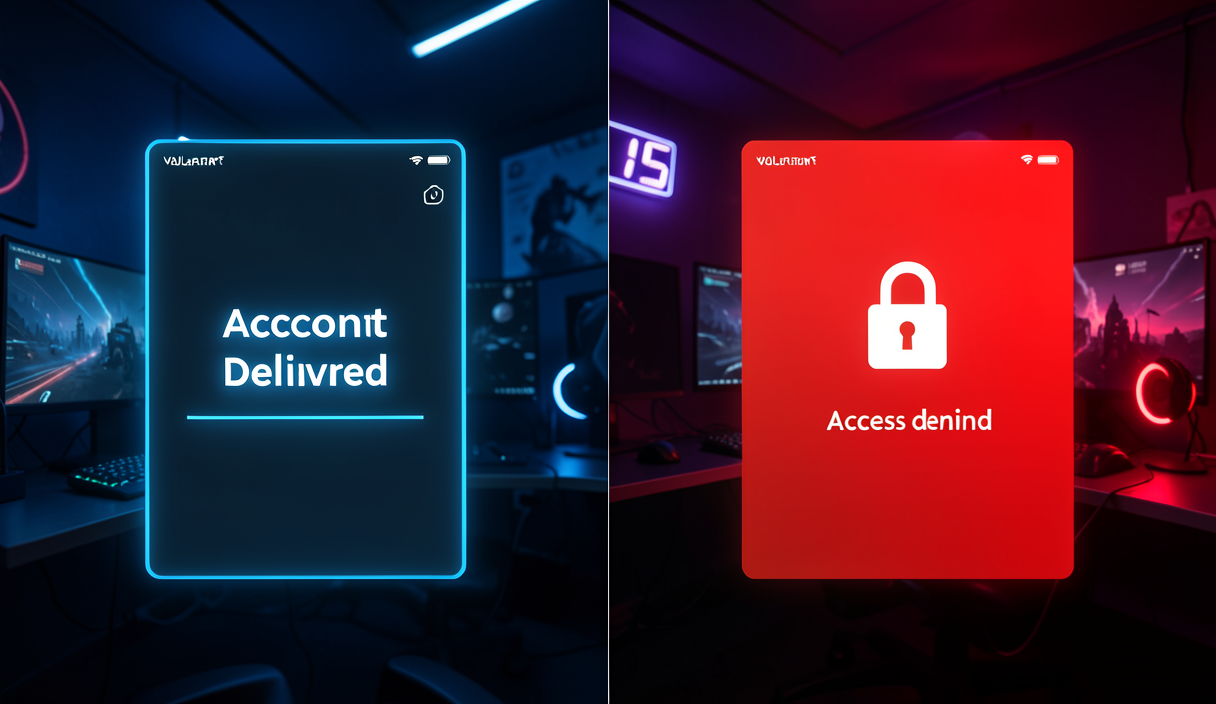
Someone on r/GamingMarketplace shared their situation last week: bought a Valorant account on G2G for $175, changed the email, set up two-factor authentication, played on it for two weeks. Day 15, the original owner contacted Riot Support with billing records. Account gone. G2G said the protection window had passed.
One day. One day past the cutoff and the money was just gone.
Scroll through G2G's reviews on ComplaintsBoard or SmartCustomer and you'll find that story repeating: account delivered fine, original owner reclaims it two to three weeks later, G2G closes the ticket. The platform sits at 2.1 out of 5 across 387 customer reviews on SmartCustomer as of mid-2026, and a significant number of those complaints involve Valorant account purchases. If you're shopping for a Valorant account on G2G, this is worth reading before you send any money.
How G2G's buyer protection actually works for Valorant accounts
G2G uses an escrow model: your payment is held by the platform until you confirm you received the account. That part works as advertised. Once you click confirm delivery, the seller gets paid and your protection window opens.
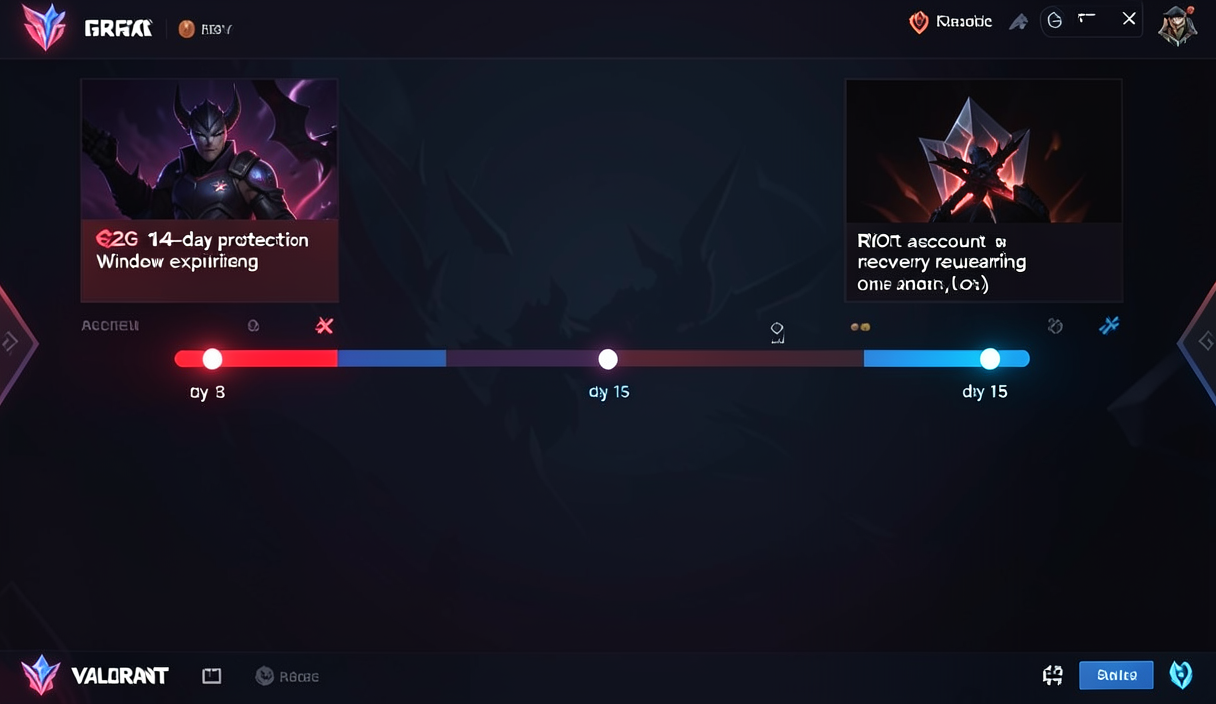
The window is 14 days.
Inside those 14 days, if the account gets reclaimed or suspended, G2G will usually investigate and refund. After day 14, you're on your own. No exceptions documented in their support documentation.
That's a problem for Valorant specifically. Riot's account recovery process has no deadline. An original owner who waits 16, 20, or 30 days to contact Riot Support with their billing records or original email will still get the account back. Buyers have no standing with Riot — selling accounts violates Riot's Terms of Service, so Riot returns accounts to whoever created them, not whoever most recently paid for them. And by that point, G2G's window is already closed.
Some G2G sellers list "30-day warranties" in their listings. That warranty doesn't hold up past day 14 because the seller can't override G2G's actual dispute policy. It's a sales line, not a guarantee.
What does a Valorant account recovery look like from the buyer's side?
This doesn't always start as deliberate fraud. Sometimes the original owner regrets selling. Sometimes they never planned to honor the deal. The result for the buyer is the same either way.
Riot's recovery process is designed to protect accounts from hackers, which is reasonable. But it also means the person who created the account has a structural advantage over anyone who paid for it later. Riot accepts the original email address, original payment method, and device history as proof of ownership. None of those things transfer in a sale.
The timeline that keeps appearing in G2G complaints:
Buyer purchases, confirms delivery, 14-day clock starts
Days 1-14: account works fine, buyer might even play ranked and build history on it
Days 15-20: original owner contacts Riot Support
Days 20-25: Riot restores the account to the original owner
Buyer contacts G2G, G2G cites the expired window, case closed
The gap between when G2G's protection ends and when Riot processes the recovery request is exactly where buyers lose their money.
The ban risk that no G2G seller can actually guarantee against
Beyond account recovery, there's a second risk: Riot's anti-cheat system Vanguard flagging the account after purchase.
Vanguard logs hardware fingerprints and login behavior. If the account was created or leveled using a bot farm, that machine's hardware ID is already in Riot's system. When you log in from new hardware, Riot sees an account with a flagged origin suddenly appearing from a different device — often a different region too. That's a ban trigger.
Riot's January 2026 ban wave removed over 340,000 accounts. Riot has issued more than 2.3 million hardware bans since then, a 47% increase over 2025. Sellers on G2G often don't know the hardware history of accounts they're reselling — they bought them from somewhere else, usually a bot farm or a prior reseller.
If the account you bought gets banned for bot-leveling history or flagged hardware, G2G won't cover it. Bans fall under Riot's enforcement of their own ToS, and G2G's dispute process doesn't extend to that.
How G2G compares to other Valorant account options
G2G is better than buying off a Discord server. The escrow system stops the nondelivery scam, which is one of the most common failure modes in P2P trades — you pay, the seller ghosts you. Escrow eliminates that. That's a real difference.
PlayerAuctions has a longer dispute window and a different seller vetting process, but higher fees and slower transaction speeds. For a high-value Valorant account, the extra scrutiny might be worth the additional cost. Valoguide covered PlayerAuctions specifically earlier this year if you want that comparison in detail.
Services that create accounts themselves, like Turbosmurfs, remove the original-owner recovery risk entirely — there's no prior owner to file a recovery claim with Riot. The tradeoff is less inventory and fewer options for specific skin collections.
Eldorado is another option in the same tier as G2G. It rates 1.2 out of 5 on SmartCustomer based on 178 reviews, which is worse than G2G, and the complaints follow a similar pattern around account reclaims.
What to actually check before buying a Valorant account on G2G
If you want to use G2G, these are the checks that matter:
Confirm the account is at least 3 months old. Newer accounts flag faster after a login from new hardware.
Ask the seller directly whether the original email is still attached to the account. A seller who won't answer that is telling you something.
Look at completed trade count, not just star rating. A 4.8 rating with 3 transactions is less meaningful than a 4.2 with 200.
Screenshot everything at the moment you receive credentials: the account summary, skin loadout, current rank, and your G2G confirmation message. That documentation is your only leverage inside the 14-day window.
Change the linked email and phone number immediately after receiving access, before you do anything else.
Know going in that none of this protects you past day 14 or against a Vanguard ban.
Buying Valorant accounts violates Riot's Terms of Service, and there's no safe version of this trade, only versions with fewer failure points. G2G removes the nondelivery risk while leaving the two that cost buyers the most money: account recovery and bans. Whether that's an acceptable tradeoff depends on what you're spending and how much of that loss you're prepared to absorb if it goes wrong.